Cat Quality of Life Calculator — HHHHHMM Scale
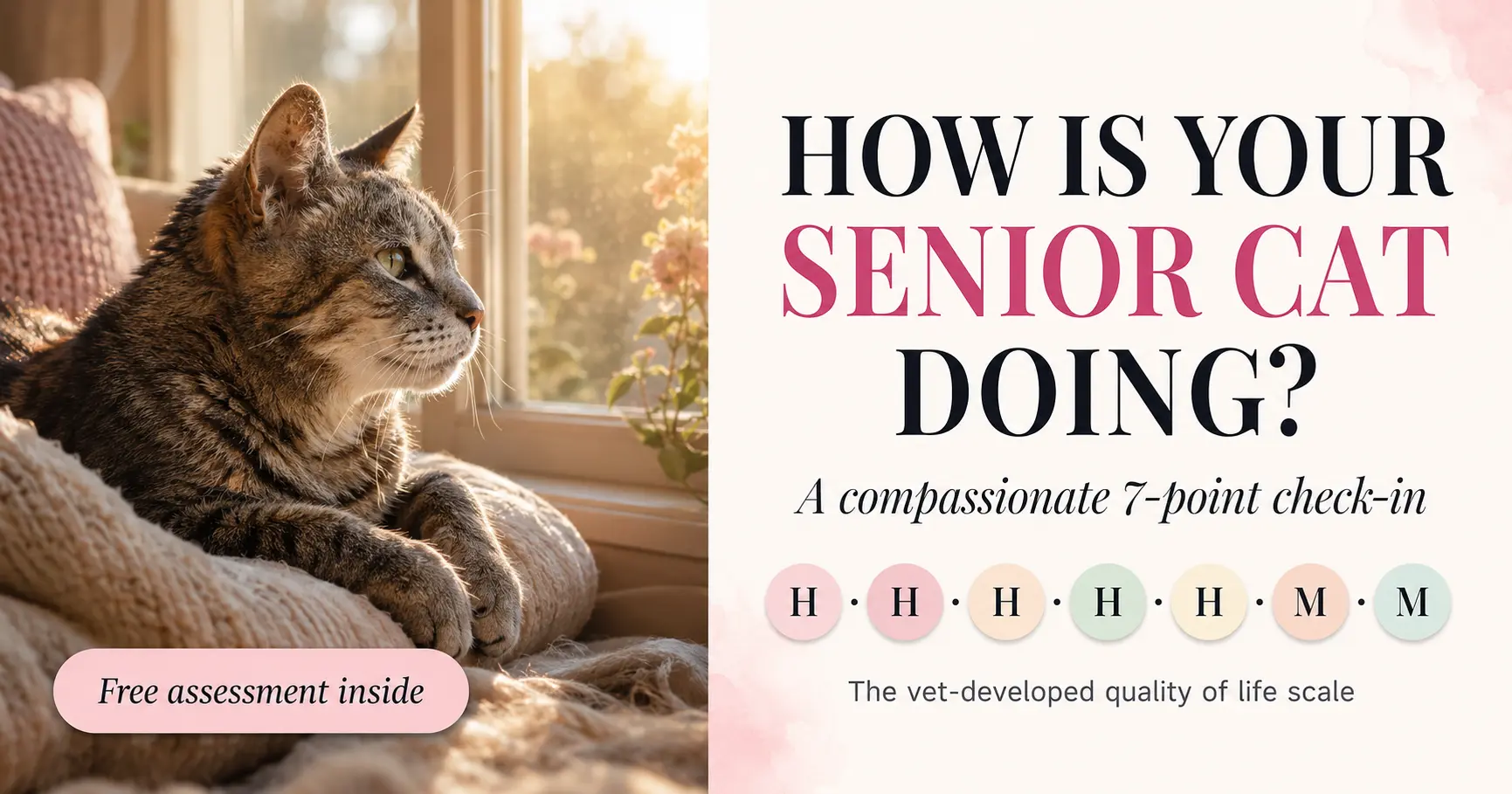
Few decisions in pet ownership carry more weight than asking whether your cat still has good days ahead. This quality of life calculator uses the HHHHHMM scale developed by veterinary oncologist Dr. Alice Villalobos — a structured framework that helps families think clearly through grief and uncertainty. It scores seven dimensions of feline wellbeing and offers honest guidance, not a verdict.
A note before you begin. This tool is one input among many. It cannot replace the judgement of a veterinarian who knows your cat's medical history, nor can it know your cat the way you do. Use it alongside conversations with your vet, family, and your own heart.
Cat Quality of Life Assessment
Rate each of the seven HHHHHMM categories from 0 (worst) to 10 (best). The total score updates as you move each slider.
HHurt
Pain control, including breathing comfort. Can your cat breathe easily? Is medication keeping pain managed?
Pain controlled most of the time but breakthrough episodes occur
HHunger
Appetite and willingness to eat. Does your cat eat enough on their own, or do they need hand-feeding or a feeding tube?
Eats only when hand-fed or with appetite stimulants
HHydration
Water intake. Is your cat drinking enough? Do they need subcutaneous fluids to stay hydrated?
Hydrated with regular sub-Q fluids
HHygiene
Cleanliness and skin health. Can your cat groom themselves? Are they kept clean after toileting? Any pressure sores?
Needs daily cleaning assistance but skin is intact
HHappiness
Joy, curiosity, and engagement. Does your cat respond to favourite people, toys, or windows? Or have they withdrawn?
Limited interaction; shows brief moments of interest
MMobility
Movement and ability to function. Can your cat walk to the litter box and food bowl without help?
Limited mobility; needs help with stairs or jumping
MMore good days than bad
The honest weekly tally. When bad days start to outnumber good days, the balance has shifted.
Roughly equal good and bad days
What this score suggests
Quality of life is at the threshold. Review pain management with your vet. Watch for downward trends across the coming weeks.
About the scale used
Range: 0-10 per category; total 0-70; threshold for acceptable QoL: 35
Source: Dr. Alice Villalobos, DVM — Quality of Life Scale for Animals, Pawspice/IAAHPC, 2004.
This calculator provides guidance for reference only. It does not replace veterinary judgement. Always consult your veterinarian for end-of-life decisions and palliative care planning.
How to Use the Cat Quality of Life Calculator
Set aside three to five minutes when you can sit quietly with your cat. Honest scoring serves your cat better than wishful scoring.
- 1
Choose a calm moment to score
Avoid scoring during a vet appointment or right after a difficult night. Choose a time when you can observe your cat over an hour or two of normal activity.
- 2
Rate each of the seven HHHHHMM dimensions
Each category uses a 0-10 scale. Zero means the worst possible state. Ten means as good as it gets. The descriptions on each slider walk you through what specific levels look like.
- 3
Be honest, even when honesty hurts
The hardest part is acknowledging suffering you've already noticed. Pet parents tend to overscore the categories they wish were better. If you find yourself debating between two numbers, pick the lower one — that hesitation is often telling you something true.
- 4
Read your total score and the suggested guidance
Totals above 35 generally indicate acceptable quality of life. Totals between 25 and 35 call for active hospice planning. Below 25, end-of-life discussions with your veterinarian are appropriate.
- 5
Track scores over days or weeks
A single low score may reflect a bad day. A downward trend across two to three weeks tells a more honest story. Many hospice vets recommend keeping a small notebook with dated scores.
What the HHHHHMM Scale Measures
Dr. Alice Villalobos, a board-certified veterinary oncologist and founder of the animal hospice movement called "Pawspice", published the HHHHHMM scale in 2004. It grew out of decades of work with terminally ill cats and dogs whose owners faced impossible decisions without any structured framework to help them.
The acronym names seven categories, each weighted equally:
H — Hurt
Pain control, including breathing comfort. Can the cat breathe without effort?
H — Hunger
Appetite and willingness to eat. Is hand-feeding or assisted feeding required?
H — Hydration
Water intake and skin elasticity. Are subcutaneous fluids needed?
H — Hygiene
Cleanliness — especially after toileting. Pressure sores from immobility?
H — Happiness
Curiosity, interaction, response to favourite people, toys, or windows.
M — Mobility
Ability to move without assistance. Can the cat reach the litter box?
M — More good days than bad
The honest weekly tally. When bad days outnumber good, the journey is approaching its end.
Each category receives a score from 0 to 10. The maximum total is 70. A score of 35 sits at the midpoint and serves as the conventional threshold below which veterinary palliative care discussions typically begin.
How to Interpret Your Score
These bands offer general guidance. Your veterinarian can refine the interpretation based on your cat's specific condition and prognosis.
Excellent quality of life
Total 56–70Your cat is thriving. Maintain current care and continue regular check-ups.
Good quality of life
Total 45–55Some limitations may exist, but daily comfort and engagement remain. Focus on supportive care.
Acceptable but watchful
Total 35–44Quality of life is at the threshold. Review pain management with your vet. Watch for downward trends.
Time for hospice planning
Total 25–34Bad days are starting to match or exceed good days. Have an honest conversation with your veterinarian about palliative care, in-home support, and when to consider letting go.
Suffering — discuss euthanasia
Total Below 25Quality of life has likely fallen below what we owe our companions. Speak with a veterinarian about humane euthanasia. The kindest gift you can give a suffering cat is a peaceful release.
Feline Hospice and Palliative Care
Hospice care for cats — sometimes called "Pawspice" — focuses on comfort rather than cure. It applies to cats with terminal diagnoses, advanced chronic kidney disease, untreatable cancer, severe cognitive decline, or any condition where the goal has shifted from extending life to honouring it.
The International Association for Animal Hospice and Palliative Care (IAAHPC) was founded in 2009 and has trained thousands of veterinarians worldwide in this specialty. Common interventions include:
- Multimodal pain management — opioids, gabapentin, NSAIDs (when appropriate), and adjuncts
- Subcutaneous fluid therapy at home for hydration support
- Appetite stimulants such as mirtazapine (often as a transdermal gel)
- Anti-nausea medications like maropitant (Cerenia)
- Environmental adjustments — ramps, low-sided litter boxes, heated beds
- Acupuncture, laser therapy, and physiotherapy for arthritis
- Emotional support for the family alongside the cat
For a deeper dive into feline end-of-life care, the IAAHPC's resource library is freely available to families navigating these decisions.
Signs That It's Time to Talk With Your Vet
Schedule a quality-of-life conversation when you notice:
- Persistent pain despite medication adjustments
- Refusal to eat or drink for more than 24-48 hours
- Inability to use the litter box without assistance
- Hiding for most of the day, even from favourite people
- Repeated medical crises requiring emergency visits
- Open sores from immobility, or persistent skin irritation
- Loss of interest in everything that previously gave joy
- A consistent feeling — your own intuition — that something has changed
Pet parents often look back and say they wish they had acted a few days earlier rather than a few days too late. Your vet has had this conversation hundreds of times. They are not there to push a decision — they are there to help you make one with clarity.